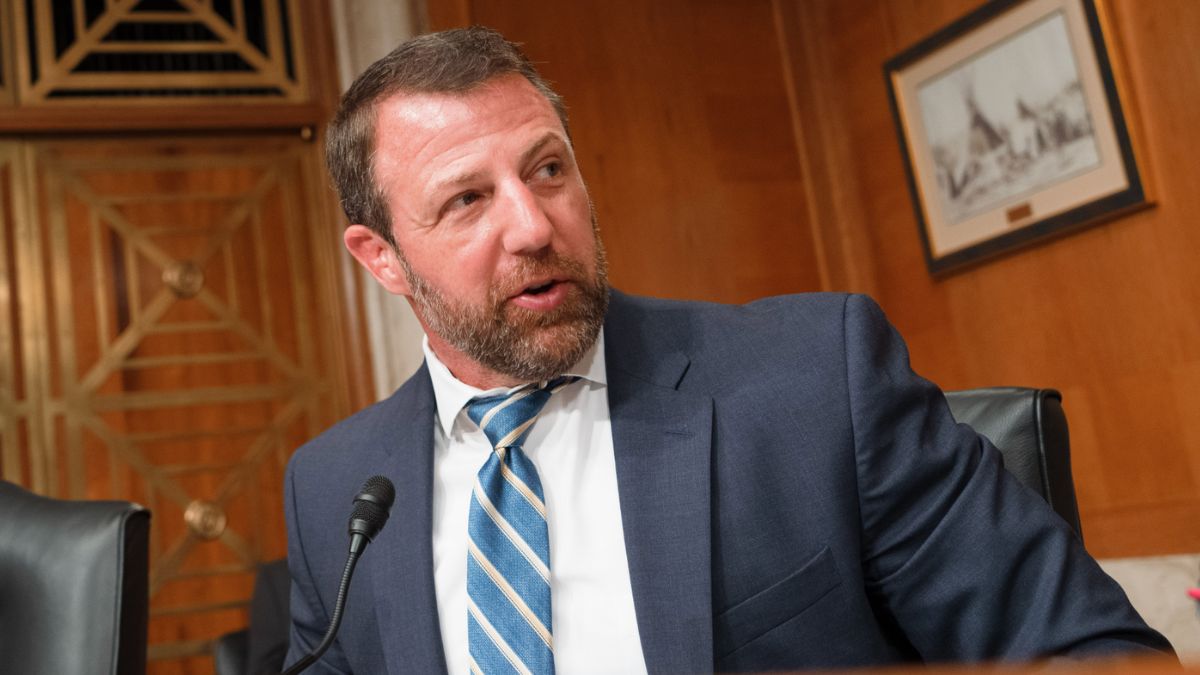
Mullin Grilled Over Stolen Valor Claims at DHS Hearing
In a Senate committee hearing that quickly escalated into a tense exchange, Markwayne Mullin, then a nominee for Secretary of the Department of Homeland Security (DHS), faced sharp questioning over allegations of misrepresenting his military background and combat experience. The contentious session saw senators challenge Mullin's temperament and, more significantly, press him on claims widely referred to as "stolen valor." The questioning underscored the rigorous scrutiny applied to high-level nominees, especially when questions of integrity and past statements come to the fore.
The hearing, intended to assess Mullin's suitability for one of the nation's most critical security roles, took an unexpected turn as Senator Gary Peters of Michigan directly confronted Mullin about several "confusing" public statements. These remarks, according to Peters, suggested a level of combat involvement that was inconsistent with Mullin's actual history, sparking a significant debate about honesty in public service.
The Heart of the Controversy: "Stolen Valor" Allegations
The core of the dispute revolved around Markwayne Mullin's alleged combat experience. Senator Peters zeroed in on what he termed Mullin's "smell of war" remark, a phrase that had garnered attention and skepticism prior to the hearing. Peters' line of questioning was direct and probing, aiming to clarify Mullin's military history. "Before your time in Congress, other than on vacations with your family, have you ever traveled to a foreign country?" Peters inquired. Mullin's initial reply was "No," which he then clarified to "Outside of vacation, or mission work? No."
However, Senator Peters countered this by stating, "Your FBI report does show some travel," specifically mentioning trips to Georgia and Azerbaijan that Peters claimed were not for tourism purposes. This direct contradiction between Mullin's spoken testimony and records presented by Peters fueled the allegations. The insinuation was that Mullin, who had never enlisted in the military, might have deliberately created an impression of combat experience, a practice often labeled as "stolen valor."
The term Mullin Stolen Valor quickly became a focal point, referring to instances where individuals falsely claim military decorations, awards, or service to achieve personal gain or prestige. While Mullin's statements did not explicitly claim specific awards, the implication of having been exposed to the "smell of war" without direct military service or combat deployment raised serious ethical concerns. For many, misrepresenting one's military background is not just a factual inaccuracy but a profound disrespect to those who have genuinely served and sacrificed.
A Defense of Temperament and Record
Beyond the "stolen valor" claims, Mullin also found himself defending his general temperament and his approach to political discourse. Early in the hearing, he directly addressed remarks from the chairman, who had reportedly called him a "liar" and a "snake in the grass." Mullin responded with characteristic bluntness, emphasizing his direct communication style. "Everybody in this room knows that I'm very blunt and direct to the point, and if I have something to say, I'll say it directly to your face," he stated.
He recounted a past conversation from his "House days" where he addressed remarks he had made, indicating a history of confrontational, yet direct, exchanges. Mullin pushed back on the "snake in the grass" label, asserting that he works "around this room to try to fix problems" and that he strives to collaborate, despite perceiving the chairman as fighting Republicans more often than working with them. He also denied invoking violence, clarifying his stance against unexpected attacks and reiterating his preference for direct confrontation, whether publicly or privately.
In a bid to demonstrate his commitment to the role of DHS Secretary, Mullin articulated a vision beyond partisan bickering. "It's bigger than the partisan bickering that we have. It's bigger than the political differences we have," he declared, promising to protect all Americans, including those in Kentucky as much as his home state of Oklahoma. He also acknowledged his imperfections, stating, "I'm not perfect. I don't claim to be perfect. I make mistakes just like anybody else." This moment of humility was coupled with a commitment to learn from errors and earn respect, asserting his readiness to take on challenges and admit when he's wrong. Mullin also drew on his personal story, reflecting on his journey from a "kid from Westville, Oklahoma" with a speech impediment to a U.S. Senator, emphasizing the humbling nature of the opportunity.
The Broader Implications for a DHS Nominee
The questioning Markwayne Mullin faced highlights the immense importance of integrity and transparency for any nominee to a high-ranking government position, particularly for the Secretary of Homeland Security. This role demands unwavering trust from the American public, Congress, and international partners. Any perceived misrepresentation, especially concerning military service or combat experience, can severely undermine that trust before a nominee even assumes office.
The "smell of war" comment, devoid of direct military service, became a flashpoint because it touched upon the sanctity of military experience. In a position overseeing national security, immigration, and disaster response, the Secretary's credibility is paramount. Questions about DHS Nominee's Combat Experience Challenged by Senators can cast a shadow on their judgment, leadership, and ability to command respect within agencies where many personnel have indeed served in uniform. For an insightful look into the specific language that caused controversy, readers may find value in examining Markwayne Mullin's "Smell of War" Remark Under Scrutiny.
The confirmation process is designed to vet nominees thoroughly, scrutinizing their past statements, actions, and character. This incident with Mullin underscores that even seemingly minor exaggerations or misstatements can have significant consequences, potentially derailing a nomination or, at the very least, severely damaging a nominee's reputation and effectiveness if confirmed. It serves as a stark reminder that public officials are held to an exceptionally high standard of honesty.
Navigating Public Trust and Accountability
For public figures, especially those seeking roles that demand immense public trust, accountability for past statements is non-negotiable. The episode involving Mullin Stolen Valor allegations offers several lessons:
- Precision in Language: Public figures must exercise extreme care with their words, particularly when discussing sensitive topics like military service. Ambiguity can be misinterpreted, and implications can be as damaging as direct falsehoods.
- Fact-Checking and Verification: For both individuals making claims and the public evaluating them, independent verification is crucial. Official records, rather than anecdotal evidence, should be the ultimate arbiter of facts.
- Owning Mistakes: As Mullin himself alluded to, admitting errors and demonstrating a willingness to learn can sometimes mitigate damage and rebuild trust. However, the nature of the mistake plays a significant role in public perception.
- The Impact of Social Media: In the digital age, past remarks can resurface with ease, making consistent and truthful communication essential over the long term.
Building and maintaining public trust requires not just competence but also unquestionable integrity. For anyone aspiring to a role as critical as the Secretary of Homeland Security, the ability to withstand intense scrutiny and emerge with credibility intact is a fundamental requirement. The questions raised during Mullin's hearing serve as a potent reminder of this truth.
The grilling Markwayne Mullin faced during his DHS hearing illuminated the profound challenges and expectations placed upon high-level government nominees. The allegations concerning his alleged combat experience, specifically the "Mullin Stolen Valor" claims, put his integrity under a powerful microscope, forcing him to directly address inconsistencies between his public remarks and his actual record. While Mullin vigorously defended his character and commitment to public service, the hearing underscored that in the realm of national security leadership, honesty, transparency, and an unimpeachable record are not merely desirable traits—they are absolute necessities for commanding the trust essential to the role.