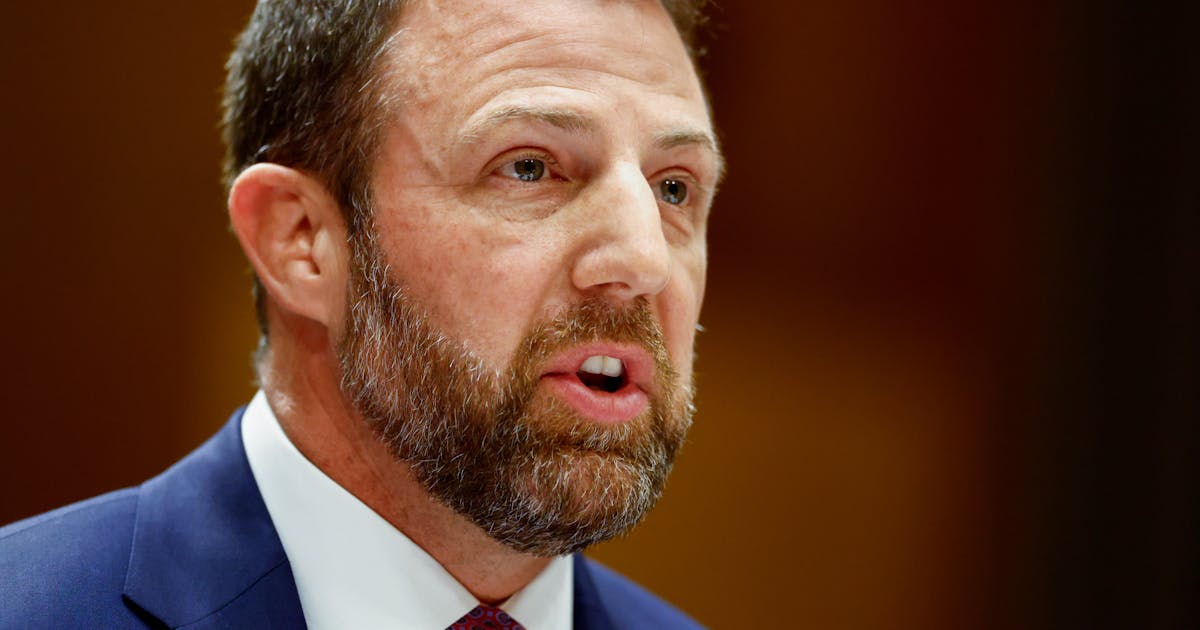
Markwayne Mullin's "Smell of War" Remark Ignites Stolen Valor Debate at DHS Hearing
During a high-stakes Senate committee confirmation hearing for the Secretary of the Department of Homeland Security (DHS), Senator Markwayne Mullin found himself under intense scrutiny, particularly regarding his past statements suggesting combat experience. The controversy, often framed under the umbrella of Mullin Stolen Valor allegations, reached a boiling point when Michigan Senator Gary Peters pressed him on a specific and highly contentious remark: the "smell of war." Mullin's responses and the subsequent debate underscored the rigorous vetting process for presidential nominees and the critical importance of veracity in public service.
The hearing, intended to assess Mullin's suitability for one of the nation's most vital security roles, quickly veered into a detailed examination of his public persona and alleged misrepresentations. Senators expressed concern over a series of "confusing" public statements that appeared to imply direct involvement in overseas combat, despite Mullin never having enlisted in the military. This line of questioning served as a stark reminder that nominees for such sensitive positions are held to the highest standards of integrity, where even perceived embellishments can have significant consequences for public trust and the confirmation process.
Intense Scrutiny Over Alleged Combat Experience
The core of the controversy revolved around Mullin's repeated allusions to combat, culminating in the memorable phrase "the smell of war." Senator Peters, recognizing the gravity of such claims, directly challenged Mullin's travel history and experiences. "Before your time in Congress, other than on vacations with your family, have you ever traveled to a foreign country?" Peters inquired. Mullin's initial, unequivocal "No," quickly followed by a nuanced "Outside of vacation, or mission work? No," immediately raised eyebrows.
The distinction between personal travel, mission work, and military combat is crucial, especially when evaluating a nominee for a role overseeing national security. Peters further complicated Mullin's position by referencing an FBI report that, contrary to Mullin's assertions, indicated trips to countries like Georgia and Azerbaijan that were not explicitly for tourism purposes. This discrepancy fueled the existing concerns about DHS Nominee's Combat Experience Challenged by Senators and highlighted the rigorous background checks undertaken for high-level appointments. The exchange underscored that in the realm of public office, especially concerning military or national security claims, specific details and verifiable facts are paramount, and any perceived ambiguity can lead to intense scrutiny and accusations of Mullin Stolen Valor.
For potential nominees, the lesson is clear: every past statement and public claim, particularly those related to sensitive areas like military service, will be meticulously examined. Transparency and honesty from the outset are not just virtues but necessities to navigate the confirmation process successfully.
Unpacking the "Smell of War" Remark
The phrase "the smell of war" carries a profound weight, evocative of firsthand, traumatic combat exposure. For many veterans, this sensory experience is a deeply personal and often painful memory earned through sacrifice. When an individual who has not served in the armed forces invokes such imagery, it often sparks outrage and accusations of "stolen valor." Stolen valor, while sometimes referring to legally prohibited misrepresentations of military honors, broadly encompasses any false claim of military service or combat experience, which is widely seen as disrespectful to those who have genuinely served.
Mullin's use of this phrase, coupled with his clarifications about not having enlisted, created a significant point of contention. It raised questions about whether he was intentionally conflating his experiences with actual combat or merely employing a figure of speech that was misinterpreted. Regardless of intent, the impact was to cast a shadow over his credibility, particularly concerning his understanding of the realities faced by service members. Critics argued that such language, when used by a civilian aspiring to a top national security post, could undermine trust within military and veteran communities.
The controversy highlights a critical aspect of public discourse: the responsibility to use language accurately and respectfully, especially when discussing topics as sensitive as military service. For public figures, the choice of words can carry immense weight and shape perceptions of their character and judgment.
Addressing Temperament, Accusations, and a Commitment to Service
Beyond the "stolen valor" claims, Mullin also faced direct accusations regarding his temperament and communication style. During the hearing, he forcefully addressed being called a "liar" and a "snake in the grass." Mullin defended his character, stating, "Everybody in this room knows that I'm very blunt and direct to the point, and if I have something to say, I'll say it directly to your face." He recounted past confrontations and his preference for direct, public, and private communication over backstabbing.
Mullin acknowledged political differences, even with those who had spent millions campaigning against him, but stressed his commitment to his job. "It's bigger than the partisan bickering that we have. It's bigger than the political differences we have," he asserted, pledging to protect all Americans, including those in Kentucky as much as Oklahoma. He offered to set aside personal animosities, expressing a desire to "earn your respect. Let me earn the job. I won't fail you."
In a more personal appeal, Mullin spoke about his humble beginnings as "a kid from Westville, Oklahoma," who overcame a speech impediment and learned the value of hard work from his father. He emphasized his journey from not knowing how to tie a tie to becoming a U.S. Representative and then a U.S. Senator, expressing humility and respect for his colleagues. He committed to admitting when he is wrong, learning from mistakes, and not backing down from a challenge—qualities he argued were essential for a leader.
This part of his testimony showcased Mullin's attempt to counter criticisms of his character by emphasizing his dedication, willingness to learn, and a personal narrative of perseverance. It demonstrated the complex interplay of policy, personal character, and political history that defines a Senate confirmation hearing.
The Broader Implications of Stolen Valor in Public Service
The "Mullin Stolen Valor" controversy, regardless of its ultimate resolution, serves as a powerful reminder of why such allegations are taken so seriously, especially when they involve high-ranking political nominees. For millions of Americans, military service represents the pinnacle of sacrifice and patriotism. Claims of combat experience, whether explicit or implied, by individuals who have not earned them, are widely seen as disrespectful to veterans and their families.
In the context of public service, particularly for positions like the Secretary of Homeland Security, trust and integrity are non-negotiable. The public and their elected representatives expect nominees to possess not only the necessary qualifications and experience but also an unblemished record of honesty. Any doubt regarding a nominee's truthfulness, particularly concerning something as sacred as military service, can erode public confidence and hinder their ability to effectively lead.
Senate confirmation hearings are designed precisely for this purpose: to thoroughly vet candidates, scrutinize their past, and ensure they meet the highest ethical standards. The intense questioning Mullin faced underscores the vigilance required in safeguarding the integrity of public office and ensuring that those who serve are held accountable for their words and actions.
In conclusion, Senator Markwayne Mullin's "smell of war" remark and the subsequent scrutiny during his DHS confirmation hearing highlighted the profound importance of integrity and transparency for public officials. While Mullin vigorously defended his character and commitment to service, the questioning from senators like Gary Peters underscored the severe implications of perceived misrepresentations regarding military experience. This episode reinforced the critical role of Senate oversight in vetting nominees and upholding the public's expectation that those who aspire to lead must be unimpeachable in their honesty and respectful of the sacrifices made by others.