DHS Nominee's Combat Experience Challenged by Senators: The "Mullin Stolen Valor" Debate Heats Up
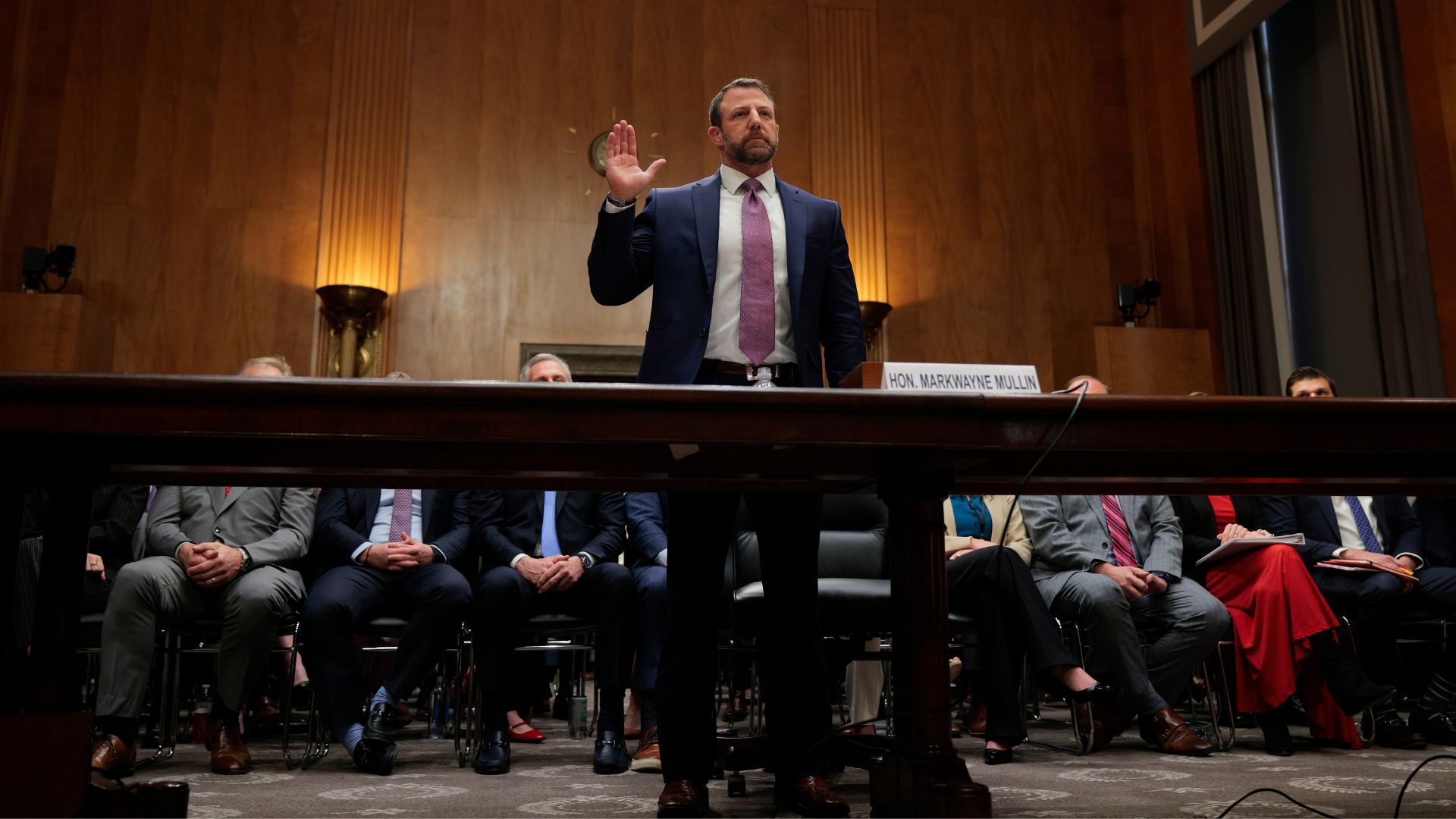
The confirmation hearing for a Department of Homeland Security (DHS) nominee is always a rigorous process, demanding scrutiny of a candidate's qualifications, temperament, and past statements. However, the recent grilling of former Representative Markwayne Mullin has drawn particular attention, not just for heated exchanges over his character, but for profound questions regarding his alleged combat experience. At the heart of the Senate committee hearing were claims implying military service and combat involvement, which have led to a contentious debate centered around what many are now calling the "Mullin Stolen Valor" controversy.
The nominee found himself on the defensive almost immediately, facing direct challenges from senators who questioned the veracity of his public remarks and his fitness for such a critical national security role. These accusations of exaggeration, particularly concerning his military background, strike a sensitive chord, raising fundamental questions about integrity and public trust in high-stakes political appointments.
The Core of the Accusation: Mullin Stolen Valor Claims Under Scrutiny
The most significant point of contention arose when Michigan Senator Gary Peters directly confronted Mullin about a series of "confusing" public statements. These statements had suggested Mullin was involved in combat overseas, despite never having enlisted in the armed forces. Peters specifically highlighted Mullin's recent remark about the "smell of war," a phrase often associated with direct combat experience.
Senator Peters' line of questioning was sharp and pointed. He inquired whether Mullin had traveled to any foreign countries for purposes other than vacation or mission work before his time in Congress. Mullin initially replied, "No," but then clarified, "Outside of vacation, or mission work? No." This response was immediately challenged by Peters, who stated, "Your FBI report does show some travel," claiming the report indicated trips to Georgia and Azerbaijan that were not for tourism. This discrepancy between Mullin's recollection and official records intensified the scrutiny, particularly concerning the vague nature of his "smell of war" comment.
The sensitivity surrounding claims of military service, often referred to as "stolen valor" when proven false or misleading, cannot be overstated. For many veterans and their families, falsely claiming combat experience or military service is a profound insult to those who have served and sacrificed. The questions posed to Mullin aimed to clarify precisely what he meant by his remarks and why there appeared to be inconsistencies in his accounts. This exchange became a focal point for understanding the depth of the
Mullin Grilled Over Stolen Valor Claims at DHS Hearing, highlighting the need for absolute clarity from nominees on their backgrounds.
Navigating Accusations of Temperament and Trust
Beyond the "Mullin Stolen Valor" debate, the hearing also delved into Mullin's temperament and past interactions with colleagues. Mullin opened his statement by addressing a chairman's remarks that had called him a "liar." He robustly defended himself, stating, "Sir, I think there's, everybody in this room knows that I'm very blunt and direct to the point, and if I have something to say, I'll say it directly to your face."
He recalled a previous conversation from his House days, suggesting that his directness was a known quantity. Mullin also addressed being called a "snake in the grass," arguing that he works "around this room to try to fix problems" and has collaborated with many people. He countered that the accuser "fights Republicans more than you work with us." Furthermore, he vehemently denied accusations of invoking violence, stating, "I don't think anybody should be hit by surprise. I don't like that. But if I do have something to say, Everybody in this room knows I'll come straight to you."
This spirited defense underscored a nominee who is not afraid to push back, but it also raised questions about how such a confrontational style might translate into the leadership of a complex agency like DHS. For a Secretary of Homeland Security, maintaining trust across diverse political spectrums and fostering collaboration are paramount. Mullin attempted to bridge this gap by stating, "I can have different opinions with everybody in this room, but as Secretary of Homeland, I'll be protecting everybody, including Kentucky as much as I will my own backyard in Oklahoma." His message was clear: despite political differences, his commitment would be to national service above partisan bickering.
The Weight of Words: "Smell of War" and Public Scrutiny
The phrase "smell of war" became a lightning rod for criticism, sparking intense public and media scrutiny. For someone who has not served in a combat role, using such evocative language to describe their experiences can be perceived as deeply disingenuous. This is particularly true in a political climate where military service often holds significant sway in public perception and policy discussions.
The context around
Markwayne Mullin's "Smell of War" Remark Under Scrutiny is crucial. While individuals can certainly experience harrowing situations or witness conflict from various perspectives, the implied direct combat involvement inherent in phrases like "smell of war" carries a specific weight for military personnel. For a nominee seeking to lead an agency responsible for national security and border protection, precision in language is not merely a stylistic choice; it's a fundamental aspect of credibility.
Practical Insight: For any public figure, especially those seeking high-level appointments, careful consideration of language, particularly when discussing sensitive topics like military experience, is essential. Transparency and accuracy prevent misunderstandings and protect against accusations that can derail a nomination.
Beyond the Partisan Divide: Mullin's Defense and Vision for DHS
Despite the intense pressure, Mullin attempted to steer the conversation towards his commitment to public service and his vision for DHS. He presented himself as a hardworking individual from humble beginnings in Westville, Oklahoma, emphasizing his father's work ethic and the journey that brought a "kid with a bad speech impediment" to a Senate confirmation hearing for a cabinet position. He highlighted his past electoral successes, from learning to tie a tie as a US Representative to becoming a US Senator, demonstrating a trajectory of overcoming challenges.
Mullin expressed humility and a willingness to learn, stating, "I won't fail you. I won't back down from a challenge, and I'll also admit when I'm wrong. I'm not perfect. I don't claim to be perfect. I make mistakes just like anybody else. But mistakes, if you own them, you can learn from them, and you can move ahead." This admission of fallibility, coupled with a pledge to commit to his duties, aimed to reassure senators that he could rise above the personal attacks and partisan differences.
His overarching message was one of dedication to the job, emphasizing that the role of Secretary of Homeland Security is "bigger than the partisan bickering that we have. It's bigger than the political differences we have. The truth is, I have a job to do and I don't like to fail at anything at all." This appeal to a broader sense of duty and the pursuit of results is a common strategy for nominees facing stiff opposition, seeking to pivot from personal attacks to professional competency.
Conclusion
The confirmation hearing for Markwayne Mullin laid bare the complexities and fierce scrutiny inherent in appointing top-tier officials. The intense focus on the "Mullin Stolen Valor" claims, stemming from his alleged combat experience and the "smell of war" remark, underscores the critical importance of veracity and integrity for anyone aspiring to a national security leadership role. While Mullin mounted a spirited defense against accusations of dishonesty and defended his direct communication style, the questions raised about his past statements and the perceived embellishment of his experiences will undoubtedly weigh heavily on the minds of senators. Ultimately, the debate highlights that for a position as vital as DHS Secretary, a candidate's record, temperament, and unwavering commitment to truth are paramount, serving as the bedrock upon which public trust and national security depend.